
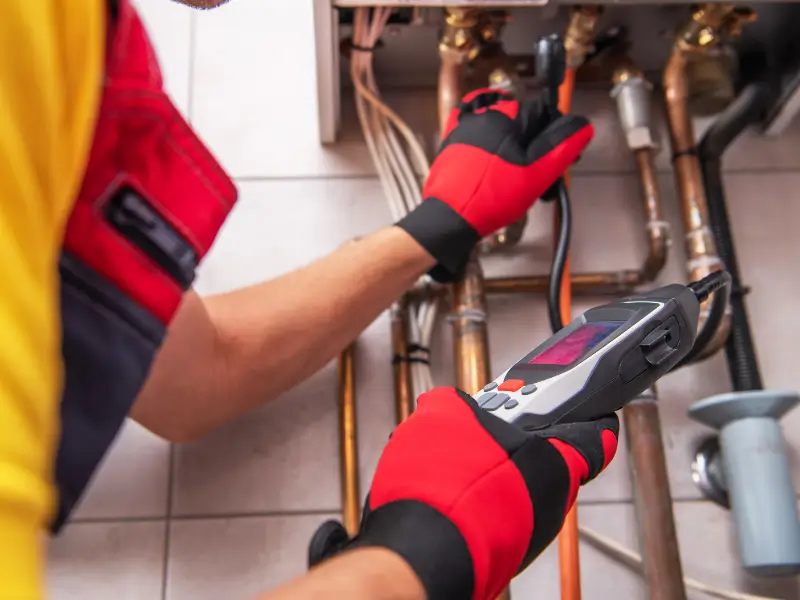
Why Plumbing Safety Is Important
Many plumbing tasks involve water, electricity, or sharp tools. Without proper plumbing safety, accidents can happen fast. A little preparation can protect you from injuries, flooding, or electrical hazards.
Learning key plumbing safety tips gives you confidence to handle repairs safely and responsibly.
Essential Plumbing Safety Tips for Every Homeowner
Here are simple but effective plumbing safety tips to follow before starting any repair or maintenance task.
1. Shut Off the Water Supply
Always locate and close the nearest shut-off valve before you start. This prevents sudden water bursts and messy flooding.
2. Turn Off Power When Needed
If you work near outlets or on a water heater, turn off the power first. Water and electricity together can cause serious harm. Use insulated gloves and check your circuits before starting.
3. Wear the Right Protective Gear
Dress for safety. Use:
- Safety goggles for splashes
- Rubber gloves for grip
- Long sleeves for protection
- Closed-toe shoes to avoid injury
Small steps make a big difference in your plumbing safety measures.
4. Keep the Area Ventilated
When using adhesives or chemicals, open windows or use a fan. Breathing fresh air reduces the risk of dizziness or irritation.
5. Use Tools Correctly
Always use the correct wrench or plier. Forcing a fitting can break pipes or cause leaks. Steady pressure works better than strength.
6. Handle Chemicals Carefully
Avoid mixing cleaners. Harsh reactions can release dangerous fumes. Choose mechanical tools like plungers or drain snakes when possible.
7. Watch for Gas Leaks
If you smell gas near your heater or pipes, stop right away. Turn off the gas, step outside, and call a licensed plumber. Never try gas repairs yourself.
Important Plumbing Safety Precautions
Even simple projects carry risks. Follow these plumbing safety precautions to stay protected.
1. Test for Lead or Asbestos
Older homes may have lead pipes or asbestos insulation. If you suspect this, pause the job and call a licensed professional.
2. Keep the Floor Dry
Water spills can cause slips. Use towels or mats to keep your work area dry.
3. Label Your Lines
Use tags to identify water and gas lines. This avoids confusion and keeps your work organized.
4. Lift with Care
Heavy objects like toilets or water heaters require safe lifting techniques. Bend your knees, not your back, and ask for help when needed.
5. Watch for Mold
Leaks can create damp spaces where mold grows. Wear a mask and clean mold with a disinfectant before continuing work.
Plumbing Safety Measures to Remember
If you like doing repairs yourself, these plumbing safety measures help you stay safe and focused:
- Keep a first aid kit nearby.
- Use bright lighting.
- Store tools properly after use.
- Stop if you feel unsure or unsafe.
- Keep children and pets out of the workspace.
Simple habits like these reduce risks and help you finish tasks safely.
Your Complete Plumbing Safety Checklist
Use this plumbing safety checklist before, during, and after your project to make sure you stay organized and safe.
Before You Begin
✅ Turn off the water and power.
✅ Gather tools and safety gear.
✅ Read any instructions for new fixtures.
✅ Check for water or gas leaks.
✅ Clear the work area of obstacles.
During the Job
✅ Keep floors dry.
✅ Ventilate the area well.
✅ Handle tools carefully.
✅ Watch for electrical connections near water.
✅ Take short breaks to avoid fatigue.
After Completion
✅ Turn the water and power back on slowly.
✅ Test fixtures for leaks.
✅ Clean the workspace.
✅ Store tools and chemicals properly.
✅ Note any future repairs needed.
This plumbing safety checklist helps you prevent mistakes and maintain your home’s plumbing system safely.
When to Call a Licensed Plumber
Sometimes, the safest choice is professional help. Contact a licensed plumber if you face:
- Burst or leaking pipes
- Sewer line problems
- Gas line issues
- Major fixture installations
A trained plumber has the right tools and experience to handle these challenges safely and efficiently.
Conclusion: Safe Plumbing Starts with Smart Habits
Plumbing projects can be rewarding when done carefully. Follow these plumbing safety tips, take plumbing safety precautions, and use the plumbing safety checklist to protect yourself and your home. Preparation and patience are key to success.
Stay alert, work safely, and know when to call for help.
How Legacy Plumbing, LLC Can Help
At Legacy Plumbing, LLC, we have served Cary, NC since 2004 with reliable and safe plumbing solutions. Our licensed plumbers use modern equipment and eco-conscious methods to handle everything from plumbing repairs and water heater services to commercial plumbing and water filtration. We believe in honest work, fair pricing, and strong community values. Call (919) 571-9146 today and let our friendly, local team handle your plumbing needs with care.
